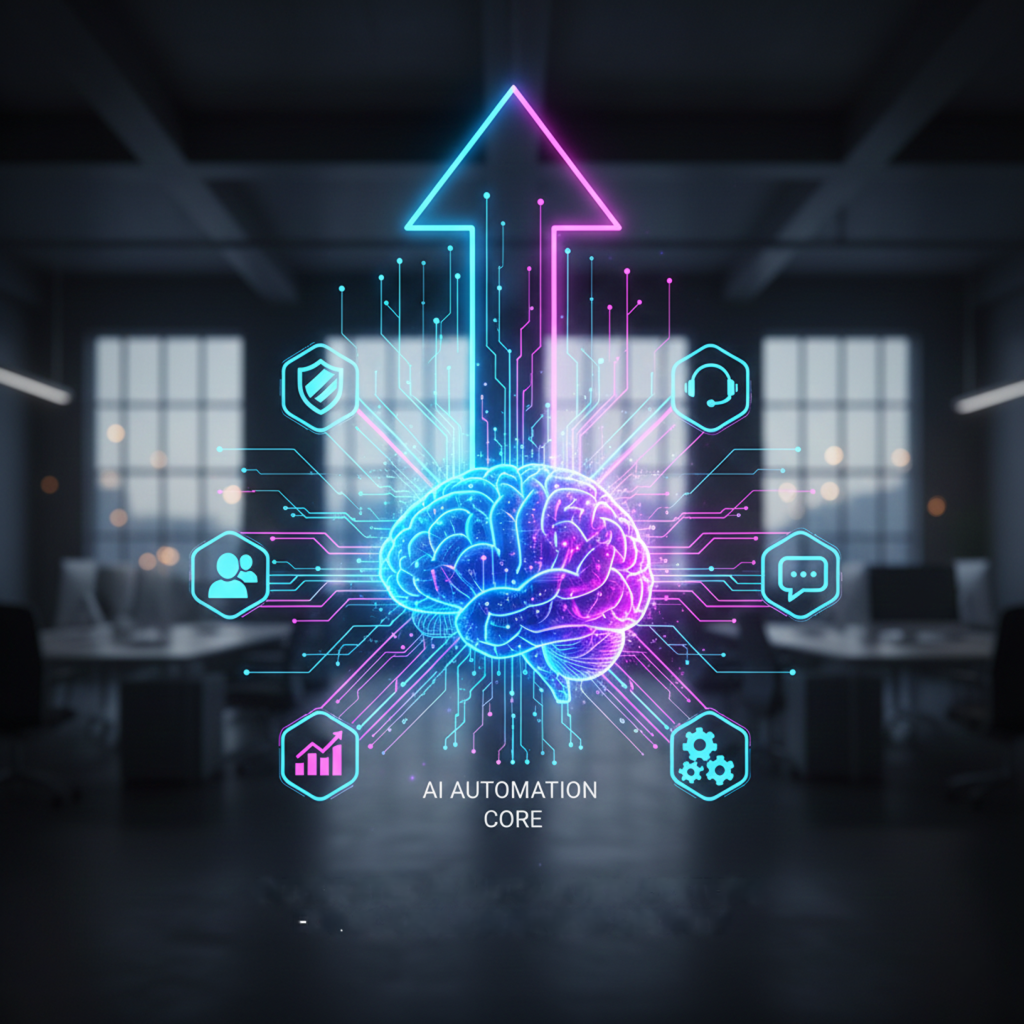
Beyond the Basics: Building Integrated AI Automation Systems for Scalable Business Growth
Welcome to the final installment of our foundational AI automation series.
In our first post, "Start Small, Win Big," we explored the "why" and introduced simple starter workflows. In our second post, "Power Up Your Efficiency," we gave you the "what"—the top free and low-cost tools to get the job done.
Now, you have the mindset and the toolkit. But if your tools are working in isolation, you’re leaving massive potential on the table.
The real magic of AI automation happens when you stop thinking about individual tasks and start building integrated systems. This is the shift from saving 10 minutes on an email to building a scalable engine that drives efficiency, improves decision-making, and fuels sustainable growth across your entire organization.
Today, we’re going beyond the basics to show you how to connect the dots and build integrated AI automation systems.
The Mindset Shift: From Tasks to Systems
Moving from basic task automation to system-level automation requires a change in perspective:
Don't just ask: "How can I automate sending this invoice?"
Start asking: "How can the entire sales-to-finance process flow without human data entry?"
Isolated automations are helpful. Integrated systems are transformational. An integrated system means your marketing data talks to your sales CRM, which talks to your finance software, all orchestrated by AI without manual handoffs.
3 Strategies for Building Integrated Systems
How do you move from disjointed tools to a humming engine? Here are three core strategies:
1. Map Before You Automate (Don't Pave Cow Paths)
Bill Gates once said, "Automation applied to an efficient operation will magnify the efficiency. Automation applied to an inefficient operation will magnify the inefficiency."
Before connecting your tools, meticulously map out your core business processes step-by-step. Identify where data gets stuck, where humans have to copy-paste, and where decisions are delayed. Only automate a process once you have optimized it on paper.
2. The "Digital Glue": Leveraging Integration Platforms (iPaaS)
You have ChatGPT for content and HubSpot for CRM. How do they talk to each other? You need "digital glue."
Integration Platforms as a Service (iPaaS) like Zapier or Make.com (mentioned in our previous post) are essential here. They act as the central nervous system of your business operations.
Example of an Integrated Flow: Instead of just using AI to write a social post, an integrated system looks like this:
Trigger: A new blog post is published on your site.
Action 1 (AI): Zapier sends the text to ChatGPT to generate 3 LinkedIn posts and a Twitter thread.
Action 2 (Approval): The drafts are sent to a Slack channel for quick human approval.
Action 3 (Scheduling): Once approved, they are automatically scheduled in your social media tool.
3. Introduce "Intelligent" Decision Making
Basic automation follows simple rules: "If THIS happens, do THAT." Integrated AI systems can handle nuance.
By connecting your data sources to AI models, you can automate decisions that used to require human intuition.
Instead of: Routing every support ticket to the same inbox.
Integrated AI: Analyzes the sentiment and keywords of the incoming ticket. If the customer sounds angry about a billing issue, the AI instantly routes it to a senior retention specialist and drafts a priority apology email for the agent to review.
Conclusion: Your Future is Automated
Congratulations on completing this crash course in business AI automation.
We started with simple workflows, armed you with accessible tools, and now discussed the strategic framework for integrated systems.
The goal isn't to replace your team; it's to liberate them from robot work so they can focus on human work—strategy, creativity, and relationships. The businesses that succeed in the next decade will be those that build the best integrated systems today.
You have the knowledge. You have the tools. The only thing left to do is start building.